The Striking Hooded Warbler
A chorus begins at the cusp of dawn. Song builds around us, sunrise revealing birds competing for breeding territories or vying over mates. Step out into the garden, and you’ll hear them by the pond or just beyond the exedra wall. Walk in the woods, and you’ll find them there, too. While the season may bring lazy days for us, the birds feel an urgency to make the most of summer months.
On one such morning, I was walking the Spring Hollow Trail at the Audubon Society’s Beechwood Farms in Fox Chapel. I was climbing the hill and heard an unfamiliar warbler song. Well, at least it was unfamiliar that day. Truth be told, I have to retrain my ears every spring and summer to recognize the warblers. Despite mnemonics that claim to turn their song into human language, “neater, neater, neater, I’m so neat” does not bring a particular species of warbler to mind. And what I was hearing didn’t sound neat, but rather abstract, something like “zippy, dippy, zippy.”
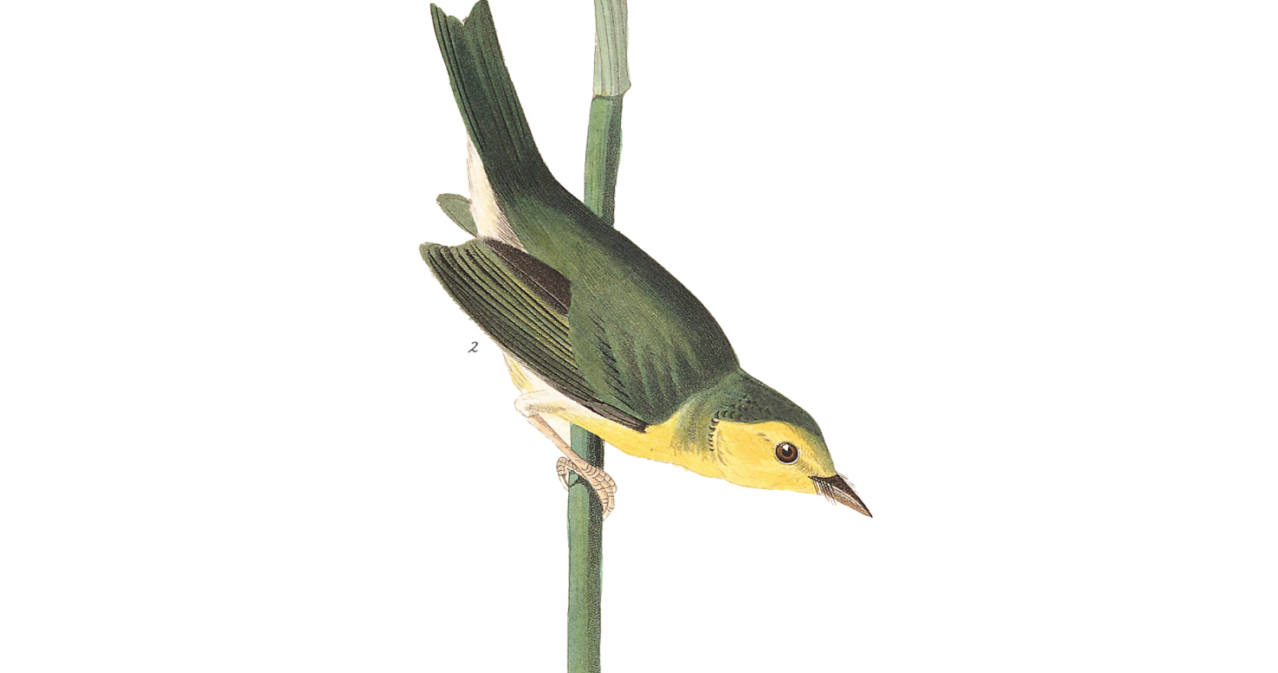
I listened again. I looked. The singer was in shadow. Until it wasn’t. A yellow bird appeared. Warbler! Many warblers are yellow, but this one had black around its head. I knew this masked musician.
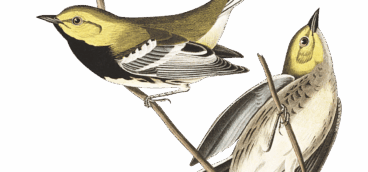
Hooded warblers are real stunners. Both males and females can sport eponymous black, balaclava-like markings. Males’ hoods are typically darker and more complete than those of the females, who sometimes have no hood at all. This neotropical passerine prefers lower forest reaches, making it easier to spot than the warblers and other perching birds who live up high. In fact, Hooded Warblers prefer dense, shrubby understory for feeding and nesting. Males can return year after year to breed in the same spot.
Female hooded warblers build cup nests from bark, grass and leaves, often no more than five feet off the ground. They’ll lay two to five eggs and incubate them for a little less than two weeks. Once hatched, nestlings fly in a flash; they’re basically grown up in a little over one week. Sometimes the parents breed again, producing a second set of offspring. By then, the parents are exhausted but have fulfilled their evolutionary duties. The next generation is born. From our region, these striking warblers migrate south, then across the Gulf of Mexico or overland along Mexico’s eastern coast into the isthmus of Central America, and occasionally as far as Venezuela.
At present, we’re in the middle of the field work needed to produce Pennsylvania’s 3rd Breeding Bird Atlas. This encyclopedic volume includes species accounts for every state bird, reviewing population and habitat dynamics. The last edition revealed a northward expansion of the hooded warbler as well as an increase in numbers. As volunteers survey the species over the next several years, citizen science will tell what the future holds for this summer beauty.
Email your avian encounters, photos, or questions to PQonthewing@gmail.com.

David Liebmann is an educator who has birded throughout the country.