


There is Crying in Baseball
In A League of Their Own, the fictionalized story of the World War II All-American Girls Professional League, Tom Hanks delivers one of the most memorable lines in the history of baseball movies. Playing the foul-mouthed, alcoholic Jimmy Dugan, the manager of the Rockford Peaches, he, at one point, verbally abuses Evelyn, his right fielder, …

The Feminine Mystique
Not every client gives an interior designer carte blanche and a generous budget to create the home of their dreams. In fact, it’s a rare client indeed who displays that level of trust and assurance. But Amanda Walton asked Alisha Gwen to do just that, beginning with the plans for her new home being built …

Black-Throated Green Warbler
The dinosaurs have returned! Birds are, by dint of evolution, a living link to dinosaurs. To remind ourselves of that, we need look no further than the Black-throated Green Warbler, a species that returned to western Pennsylvania in early April from as far south as Venezuela and Columbia and has been nesting and raising young …

What Do I Know? David Holmberg
I grew up in Columbus, Ohio, where my father did factory work for General Electric and Westinghouse. My mother was a nurse. We never starved, but we didn’t have a lot. We were just a middle-class, fundamentally stable family. And the expectation in our home always was: If you wanted more, you had to do …

Go West (to Cleveland) and Rock the Night Away
As the Rolling Stones sang, “I know, it’s only rock and roll, but I like it.” In fact, LOTS of people love it. 2025 marks the 30th anniversary of the Rock & Roll Hall of Fame, which attracts over a half-million visitors annually who come to reminisce, learn and share their love of music with the …
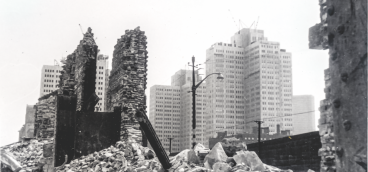
75 Years Ago the Renaissance Began
The official start to Pittsburgh’s long-cherished ambition to become a Most Livable City took place on the grey-skied afternoon of May 18, 1950, and it was noisy. At a shouted signal from Pennsylvania Gov. James Duff, an 1,800-pound wrecking ball slammed into a 103-year-old vacant brick warehouse on Exchange Way between Liberty and Penn avenues …
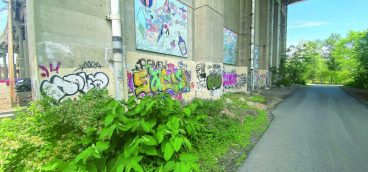
An Opportunity for Each of Us
It’s been 23 years since the saga of the discarded toilet. I lived in Squirrel Hill then, and each day as I drove Downtown to work at the Post-Gazette, I followed the same path as thousands of other motorists, coming through Oakland, exiting the Boulevard of the Allies down and to the right via a …
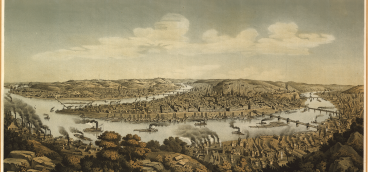
Pittsburgh’s Contributions to the World, Pt. IX
To celebrate the beginning of our 20th year, we’ve set out to catalogue the contributions that Pittsburgh and western Pennsylvania have made to the world. The list has grown and grown, and despite our best efforts, we know we’ll leave out key contributors. I think you’ll find that this small city at the confluence of …

The Spring 2025 issue:
Pittsburgh Tomorrow: The Voyage of a Year
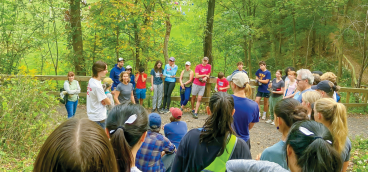
At 3 a.m. Sunday, October 20, I bolted out of bed with a thought. Weeks earlier, I’d tried unsuccessfully to attend a Kamala Harris rally to spread the word about the Pittsburgh Tomorrow project. On this Sunday, Elon Musk was coming for a rally — and if I could get in, I wanted to be …

What Do I Know? Stanley Druckenmiller
I was born in 1953 in Philadelphia and grew up in New Jersey and Virginia. By the eighth grade, I had attended six public schools before being enrolled at a private day school in the ninth grade. My father, who was a chemistry major in college, worked for Dupont and ended up in labor relations. …

Dissatisfied but Grateful
To satisfy and to gratify are often used interchangeably, but they have totally different meanings. To satisfy, or to be satisfied, refers to a variety of human needs that periodically demand to be met and satiated in order to be eased. The need for food, water, sleep, space, companionship, alleviation of pain, or protection from …

Nashville, Pennsylvania
After an 11-year exile to Nashville, Tennessee, I finally woke up smelling Pittsburgh. I woke from dreams of flying through the Conemaugh Gap, inhaling the untouched scent of the Laurel and Cresson mountains surrounding my hometown of Johnstown, and continued across Route 22 to the musky smells of the Monongahela and into the mist of bridges …
Pittsburgh Ballet Theatre Finds Poetry in Dance
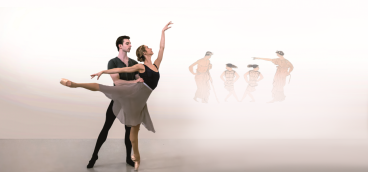
I should have known something special was happening Downtown on a windy, wet, early-April evening when I saw a 10-year-old girl literally yanking her mother into the box office of the Benedum Center. I hadn’t seen a child this excited to attend a performance since I witnessed a little boy twirling his red matador cape …

Conway, Buford, Oshry, Morby, Moriarity, O’Reilly, Nutting, Ochester, Eberle, Courtney
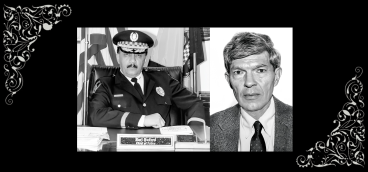
Tom Conway, 71 International president of United Steelworkers since 2019, Conway was committed to making things in America and remained unwilling to accept that globalization was better. He tried to make changes in manufacturing that would lead to a cleaner environment and worker health and safety. A legendary negotiator who believed in the union ideal of “stronger …

Speaking of Drinks…
Tiki two As I mentioned, I came of legal drinking age at a time when you could only get tiki drinks at Chinese restaurants. The pioneering Don The Beachcomber was no more, and as far as I knew all the Trader Vic’s had closed, except for a few locations abroad. Previously in this series: The …

Spring Blooming Plants Blooming in Fall
It’s the holiday season and my rural Pennsylvania town is bursting with the signs of Christmas: wreaths hung on doors, trees strung with colorful lights, a creche erected in the town square — and spring-flowering plants in bloom. My forsythia is blooming a bright yellow. White lilac flowers are just dying back. Pink magnolia buds …

Charitable Giving: Why Does it Matter?
Editor’s note: In this season of giving, we asked some of the region’s nonprofit leaders to answer a simple question: Why is charitable giving so important in our society? Part II Laura Kelly. Brothers BrotherCharitable giving builds a foundation for a better future by promoting understanding, kindness, and collective efforts towards positive change. When members …

The Tiki Phenomenon
I had the great misfortune to reach legal drinking age just as the tiki drink phenomenon was turning into a parody of itself. Formerly terrific drinks such as the Zombie, the Scorpion and the Rum Runner were now available only in Chinese restaurants and they all tasted exactly alike, being made by then out of …




Recent Issues
Explore The Archives ››