Refreshing Candor Imbues the Senator’s ‘Unfettered’
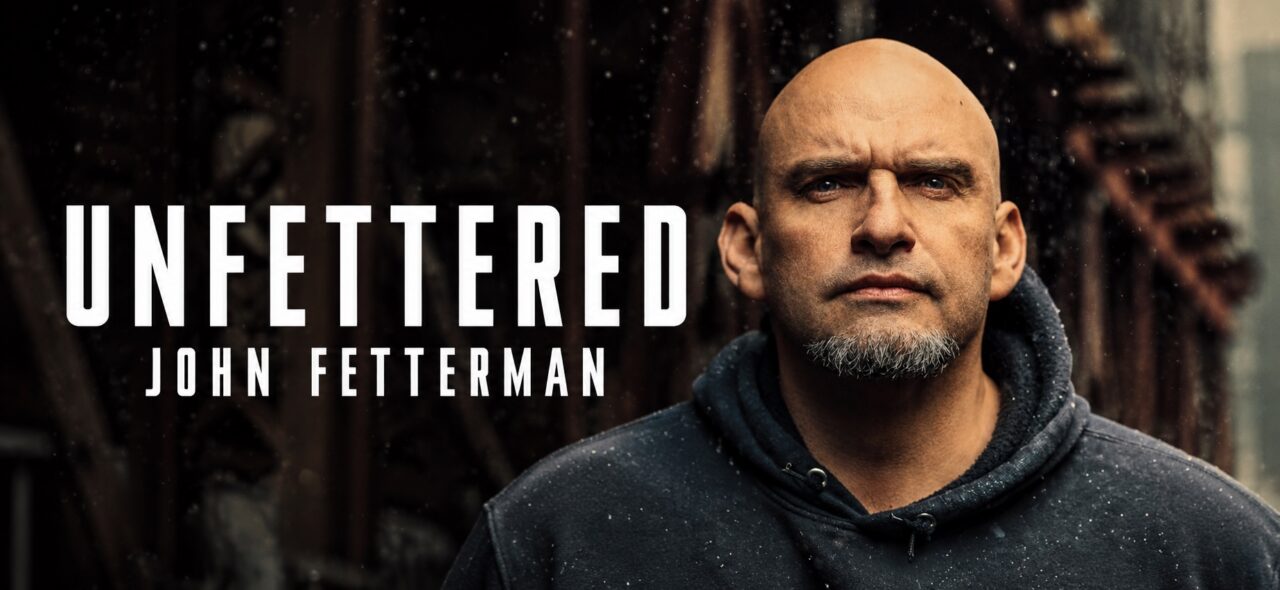
The poet Rainer Maria Rilke once said, “The only journey is the one within.” For people experiencing tough times (and the accompanying feeling of doom that might follow), it’s an important consideration. John Fetterman also regards those moments as important turning points in his life, and there are more than a few bumps to balance out the political success he’s found as Braddock mayor, lieutenant governor and now, the senior U.S. senator (D) of Pennsylvania. In his recent memoir, Unfettered, he points to one such moment, the 1993 car accident that took his friend Eric Serra as the point “where my life really began, the serendipitous arc.”
At the time, he was to graduate from the UConn School of Business in Storrs, Connecticut, and like most business school students, he was “not an altruist. … I was interested in making money.” Instead, with his friend’s death, “it became clear to me that so much of what happens to you — success versus failure, happiness versus hell, life versus death — is a function of luck and arbitrariness, with outcomes determined in a matter of seconds. You think you can dictate the circumstances, but the only thing you can do is take the circumstances you have been given and do something with them.” It’s a passage that’s as philosophical as Fetterman gets while also summing so much of what he has become — and overcome.
Growing up in York, Pennsylvania, he had a modest upbringing as the son of a father who was building an insurance company, and his childhood was “the essence of suburban life … carefree and simple.” Obsessed by butterflies at an early age, he saw they offered a freedom to “the self-consciousness, the awkwardness” that he seems to have never outgrown, while filling out to “six foot eight, which makes me the second tallest senator in American history.” The default voice Fetterman employs throughout the readable 213 pages is often self-deprecation, which can either point to low self-esteem or allowing for vulnerability and introspection. He characterizes himself as “weird people,” “Andre the Giant,” and looking “like a skinhead. I stand out everywhere … my ears stick out like the flaps of a jet wing … I can be ornery … no one will mistake me for a good time.”
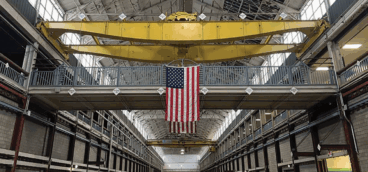
Substance and loyalty to people, not party, defines Unfettered as we learn how he went from having a bright future in the risk-management game to living in the basement of an abandoned Braddock church that reminded him of a setting for Fight Club, “big and dingy and sparse and conducive to men beating the hell out of one another without anyone hearing it.” His analysis of Braddock’s (and Pittsburgh’s) role in the rise and fall of the steel industry keeps with a necessary understanding that befits a mayor who won election by a single vote and set up shop in an old car dealership. Across the way, he reveals the Edgar Thomson Steel Works as “a Rube Goldberg hodgepodge” with its “pipes and stacks billowing steam, involving winches and sparks and liquid fire like lava.”
Braddock had gone from “bustling with so many strollers that you sometimes had to walk in the street” to “something out of Little Shop of Horrors. Porches were sinking. The crime rate soared.” By the 1980s, 115,000 jobs were lost, as well as “the great American strength — making things (instead of merely designing algorithms and serving drinks and Reubens, as we do in our current service economy).” Fetterman sides with the working class and doesn’t let readers forget about the “immigrants who built the infrastructure of the country in the early 1900s despite withering racism and contempt from others.”
If there’s a hero in this memoir, it’s less Fetterman than the support of his unflinching wife, Giselle, and Fetterman’s caring campaign staff and family, who not only recognized the signs of his stroke but later leaned hard on him to seek help for the debilitating depression that followed. Fetterman’s honesty about the bleakness of those depths and his suicidal ideation that sometimes involved the Rankin Bridge is noteworthy and important for others to hear, given his initial stubbornness.
For political junkies, some might be unaware of his beef with Pennsylvania Gov. Josh Shapiro, who comes across as less genuine and more politically calculating than Fetterman would like. It’s also important that Fetterman continues to embody the words of Franklin D. Roosevelt that he quotes: “Better the occasional faults of a government that lives in a spirit of charity than the constant omissions of a government frozen in the ice of its indifference.”

Fred Shaw is a Visiting Lecturer in Writing at the University of Pittsburgh.