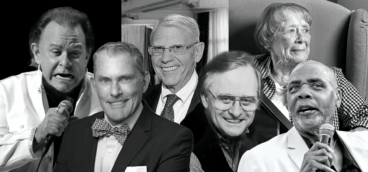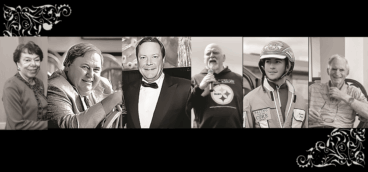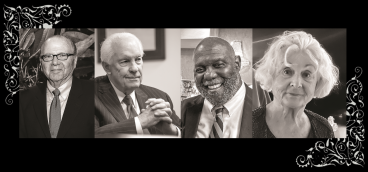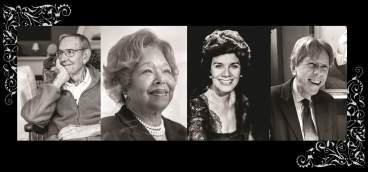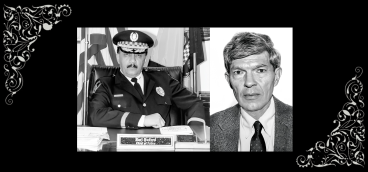
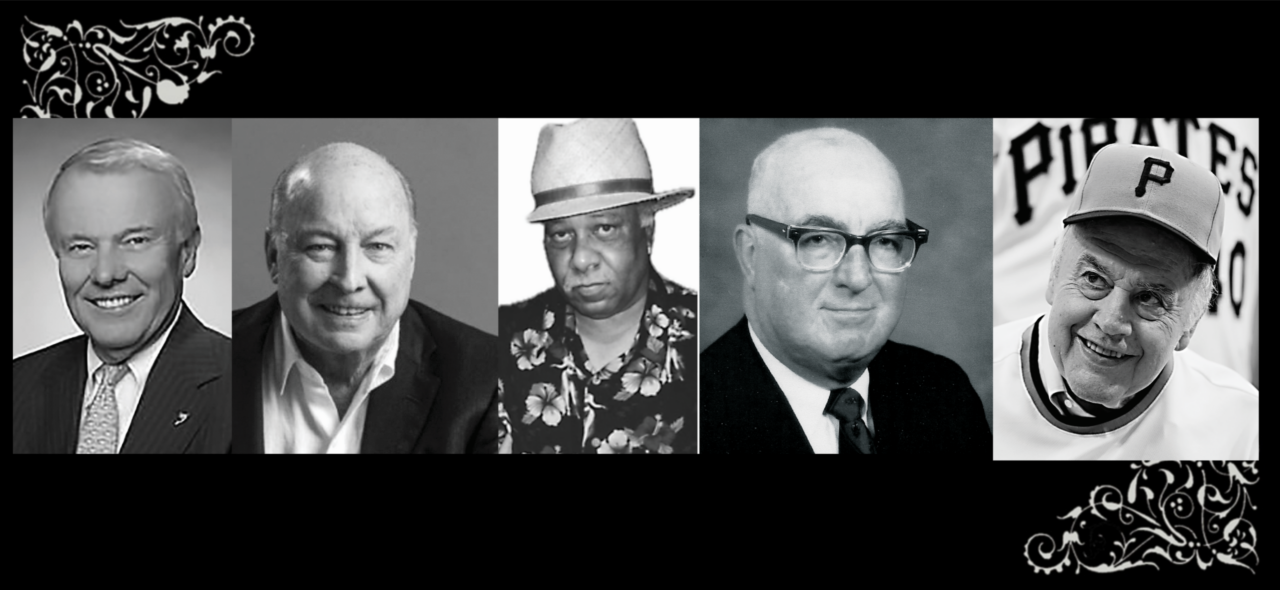
Gumberg, Tobin, McGregor, Blumstein, Sheetz, Northrop, McDonough, Fenves, Davidson, Murphy, Patterson, Queenan
Ira Gumberg, 72
With a Harvard Business School degree, he joined J.J. Gumberg Company, the real estate company his grandfather started, and as chairman, he helped grow the shopping center mall business. The company launched its retail property division in 1977 and built the first American-style mall in India, eventually expanding throughout the subcontinent. He was a former CMU and Pitt trustee and his Ira J. Gumberg Family Foundation made numerous educational charitable donations.
Bill Tobin, 94
After graduating from The Lawrenceville School and Yale, Tobin followed his father and grandfather into retailing, eventually rising through the ranks to become president and CEO of Kaufmann’s department store. During his 20 years there, he grew the chain beyond western Pennsylvania, acquiring smaller chains in parts of New York and Ohio. He served on numerous boards including CMU, the Pittsburgh Symphony, and Ear and Eye Hospital.
Jack McGregor, 91
The former Pennsylvania state senator, along with law school classmate Peter Block, assembled a group of local investors including Art Rooney, Richard Mellon Scaife, and H.J. Heinz II to secure Pittsburgh a National Hockey League franchise when the league added six teams to its “Original Six” in 1967. McGregor was the team’s first president and CEO and represented Pittsburgh on the NHL’s Board of Governors. His first wife chose the name “Penguins” from thousands of suggestions because of the Civic Arena’s nickname, “The Igloo.”
Alfred Blumstein, 95
He traveled to Sweden in 2007, where he was presented to the queen and honored with the Stockholm Prize in Criminology, often referred to as the “Nobel Prize of criminology.” A renowned criminologist and former dean of CMU’s Heinz College of Information Systems and Public Policy, Blumstein was appointed by Lyndon Johnson to the President’s Crime Commission in 1965. He used his operations background to become one of the first to explore criminology in ways that went beyond social science, coining the term “criminal justice system.”
Steve Sheetz, 77
Sheetz was just 12 when he started working at Sheetz Kwik Shopper in Altoona. He would spend 60 years helping to build a multibillion-dollar family empire, which now includes more than 800 bright red convenience stores across seven states. His older brother founded the company in 1952 and Sheetz served as CEO from 1984 to 1995, when he hired executives from Disney and Marriott to improve the food offerings, expanded the territory, and oversaw its petroleum distribution business. He founded the Sheetz Fellows Program for Penn State Altoona students and established the Sheetz Center for Entrepreneurial Excellence in Altoona.
John Northrop, 95
An avid sailor, Northrop was the oldest living member of the Annapolis Yacht Club and sailed around the world and the Chesapeake Bay well into his 80s. He lived in Washington, PA, where he was president of The Observer Publishing Company, which was founded by his grandfather. He was a founding trustee of the Washington County Community Foundation, a past chair of the Pennsylvania NewsMedia Association (PNA), and a longtime board member of Washington and Jefferson College.
Tim McDonough, 68
McDonough was a lifelong Pittsburgher who spent his career as a largely unseen editing hand guiding and polishing the work of city desk reporters on deadline at the city’s largest daily newspapers — The Pittsburgh Press and the Post-Gazette. For more than 40 years, in the decades when Pittsburgh newspapers were at the height of their power and in the last two decades during their decline, McDonough’s attention to detail, deep knowledge of this region and steady demeanor made Pittsburgh’s top newspapers better on a daily basis.
Steven Fenves, 94
Fenves led CMU’s Engineering Design Research Center, one of the first National Science Foundation engineering research centers, and helped develop STRESS, an early computer program for structural engineering, and in 1976, was elected to the prestigious National Academy of Engineering. A Yugoslavian Jew, he survived Auschwitz and Niederorschel because he could speak German, Polish and Hungarian and worked as an interpreter in the camps. After an 11-day march to Buchenwald, during which many died, he awoke to find the camp liberated. He was 14.
Robert Davidson, 77
He went to high school in Milan, spent two years in Nepal with the Peace Corps, and returned to study zoology. Davidson spent his career at Carnegie Museum of Natural History as Collection Manager in Invertebrate Zoology. He became a distinguished entomologist and the recognized expert within his specialty, Carabidae beetles. He traveled the world collecting beetles, published 27 scientific papers on them, and discovered and named several new species. Because of his assistance to other scientists, colleagues honored him by giving his surname to over 50 insects and other invertebrate animals.
Carl Murphy, 89
A jazz drummer who was honored by the Black Political Empowerment Project for his contributions to music, Murphy was the last of 12 siblings in a musical family. His father played guitar, his mother was a church pianist, and he and his brother played drums. He worked days with the postal service and railroad, and by night he played at Walt Harper’s Attic, The Crescendo Lounge, the Crawford Grill and other jazz clubs. He was known for his “telepathic” ability to predict how other musicians would improvise, including Wendell Byrd, John “Squirrel” Mosley, Alphonso “Pete” Henderson, Gene Ludwig and Judge Warren Watson.
Maggie Patterson, 80
Patterson was a leading Pittsburgh journalism teacher. After a five-year stint as a young reporter at The Pittsburgh Press, she turned to university life, first at the University of Pittsburgh, later as a teacher of journalism at Indiana University of Pennsylvania, and finally at Duquesne University, where she taught journalism for 43 years. In May, the Press Club of Western Pennsylvania honored her with its Service to Journalism Award.
Chuck Queenan, 95
Charles J. “Chuck” Queenan Jr. was one of the most important figures of the Pittsburgh business and legal world for the past 50 years. In 1956, he became the 12th lawyer at Kirkpatrick, Pomeroy, Lockhart & Johnson, building it into one of the nation’s premier law firms. Possessed with exceptional intelligence, he earned his undergraduate degree from Dartmouth, followed by a degree from Harvard Law. He became broadly known as “the top lawyer in Pittsburgh,” chairing the firm from 1975 to 1990, mentoring countless lawyers in town, and providing strategic aid and advice to the city’s top corporate and civic leaders. His was an unusual combination of outstanding legal capability with strong and deep relationships, which he used to his clients’ and the city’s benefit. Queenan, for example, was instrumental in creatively engineering the deal that helped Richard Simmons lead a management buyout of Allegheny Ludlum and ultimately create Allegheny Technologies. He chaired numerous boards, including Carnegie Mellon University when it chose Jared Cohon as president and the Allegheny Conference on Community Development when it helped to create the Regional Asset District, which has bolstered funding for numerous key regional nonprofits. He and his wife JoAnn met in grade school and were together until her death in 2021.

Questions or corrections? Contact us at web@pittsburghquarterly.com.