AI vs. Me
I have always loved to travel. Whether a grand tour of Europe, an exotic safari or simply a weekend away, I embrace it. And, I actually enjoy the planning — selecting destinations, flights, lodgings, itineraries, activities, restaurants, and tailoring each trip to our interests.
As a child, I pored over each spiral-bound AAA TripTik and the coordinating “big” maps, highlighting our route in neon yellow, with the promise of new adventures. Once we piled into our ’65 Chevy Impala station wagon and hit the road, I’d read with anticipation the fantastic delights and attractions awaiting us in each upcoming town in the AAA state books. I didn’t always succeed in convincing our destination-oriented father to stop at every “Gem City” or “Gatorland” along the way, to go through hokey museums and eat local delicacies. (In his defense, “rattlesnake bites” are more an overpriced novelty that none of us would have actually relished.)
I still like to plan my own trips, relying on experience, word-of-mouth, articles I’ve saved and websites such as Trip Advisor, Yelp, Seat Guru, Michelin, and a personal favorite, Atlas Obscura, for off-the-beaten-path suggestions. In foreign cities, I often start with a hop-on/hop-off bus tour to learn the lay of the land if I haven’t arranged a private tour.
But when my husband and I decided to go to Colorado and New Mexico for a couple of weeks, I decided to try artificial intelligence (AI) to see if mine was one of the many jobs that is easily replaceable. I searched for AI trip planners and selected PlanTrip.io after trying it and a few others. It was user-friendly and didn’t require lots of personal information. I wanted to find a site that would be easy for a novice to navigate and achieve good results. The gauntlet was dropped and I faced off against AI.
I entered our trip’s basic parameters and let PlanTrip do its thing. I gave it our start and finish dates, times and locations, beginning in Golden, Colorado, and ending at the Denver airport, asking for a route through Santa Fe and Taos. I told it that we wanted to take scenic routes, stopping at state and national parks, cultural highlights, museums, special events, and the “oddities” I like to check out.
The first results sent us straight from Golden to Santa Fe on a six-hour, 350-mile drive on the first day. Apparently, it was a race, not a journey! It had us eating dinner each day at around 8 p.m., (10 p.m. “Pittsburgh time”). I changed the guidelines to include a leisurely, two-day drive to Santa Fe, and asked for an earlier dinner.
The second attempt was much better. It gave a daily itinerary with destinations, approximate times for each attraction and the cost, if applicable. It gave occasional restaurant suggestions, mentioning special dishes for which the establishments or region were known. Or, it would give an area to dine, such as “the Plaza.” At the end of each planned day, there was a link to Booking.com to make hotel reservations. (As we frequently use Booking and are “Genius Level 3” and entitled to the highest discount rate on rooms, this was what I would have used anyway, so I was happy with the suggestion.) My goal was to stay in lodgings that had as much local flavor as possible and avoid national chains, which is doable with Booking.
For my approach, I went old-school and stopped at the AAA in State College, Pennsylvania, because I wanted actual paper maps. I’ve learned from previous experiences that I can’t rely on Waze for navigation in the mountains or wide-open spaces of the Southwest (or mountains or remote areas), because internet service (and I) can be lost. I was the only AAA customer, and they were quite helpful. They gave me all of the maps that I needed and even printed out and stapled together a sort of TripTik (which also can be done at home). I gave them the same basic itinerary that I had tentatively set up with PlanTrip. AAA’s itinerary mentioned similar points of interest along the way on the individual map pages, which were still highlighted in that familiar neon yellow, although now done by printer, not humans. The state books are no longer published, as that information is available online.
It was then that the cracks in AI became evident. For starters, AI doesn’t know me or my lifestyle. On some days, it gave me three hours in the morning for breakfast and packing — too much. On others, it suggested a 5 p.m. dinner and told me to turn in to rest for the next day’s drive. I ultimately told it to tighten things up.
It had us leaving Santa Fe after a few days, driving 90 minutes north to Taos and spending the night, only to return to Santa Fe for another night. Then, we were to take the same road past Taos the next day. And so on.
It highly recommended the Taos Pueblo, a UNESCO World Heritage Site, giving hours of operation and admission costs. But I knew from my research that it closes for a period every August, exactly when we were going. AI knew our dates but missed this.
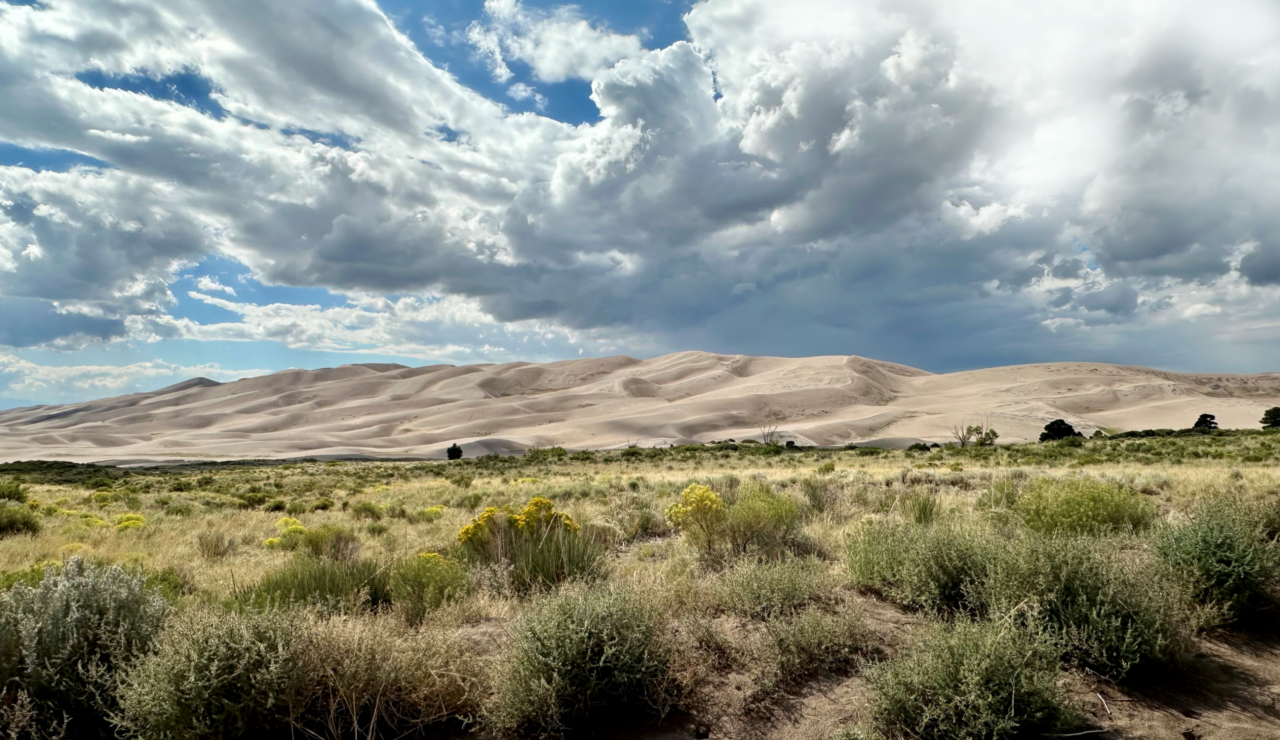
The trip itself was wonderful. We toured the Buffalo Bill Museum & Grave in Golden. (Fun fact: He brought his Wild West Show to Pittsburgh 20 times between 1873 and 1910.) Nearby Red Rocks Amphitheatre was once considered one of the Seven Wonders of the Geological World. We spent the night at amenity-rich Victorian Downen House in Pueblo. Known as “Steel City” and the “Pittsburgh of the West,” Pueblo is fortunate to still have a robust steel industry. Near Alamosa, we marveled at Great Sand Dunes National Park & Preserve, North America’s tallest dunes.
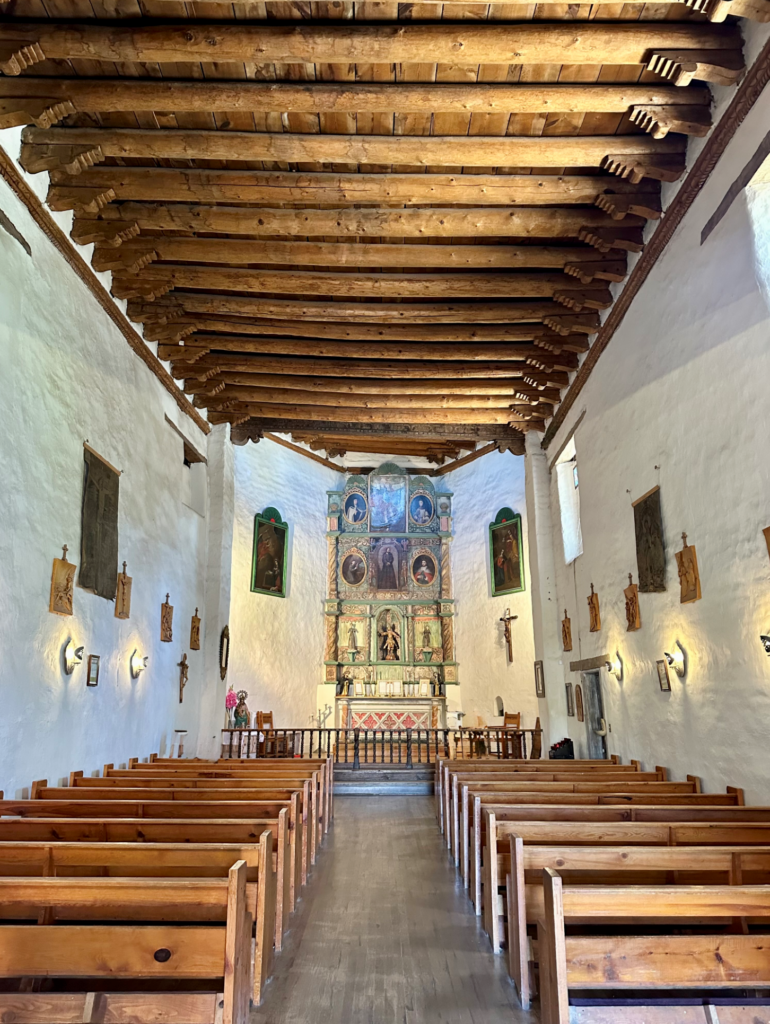
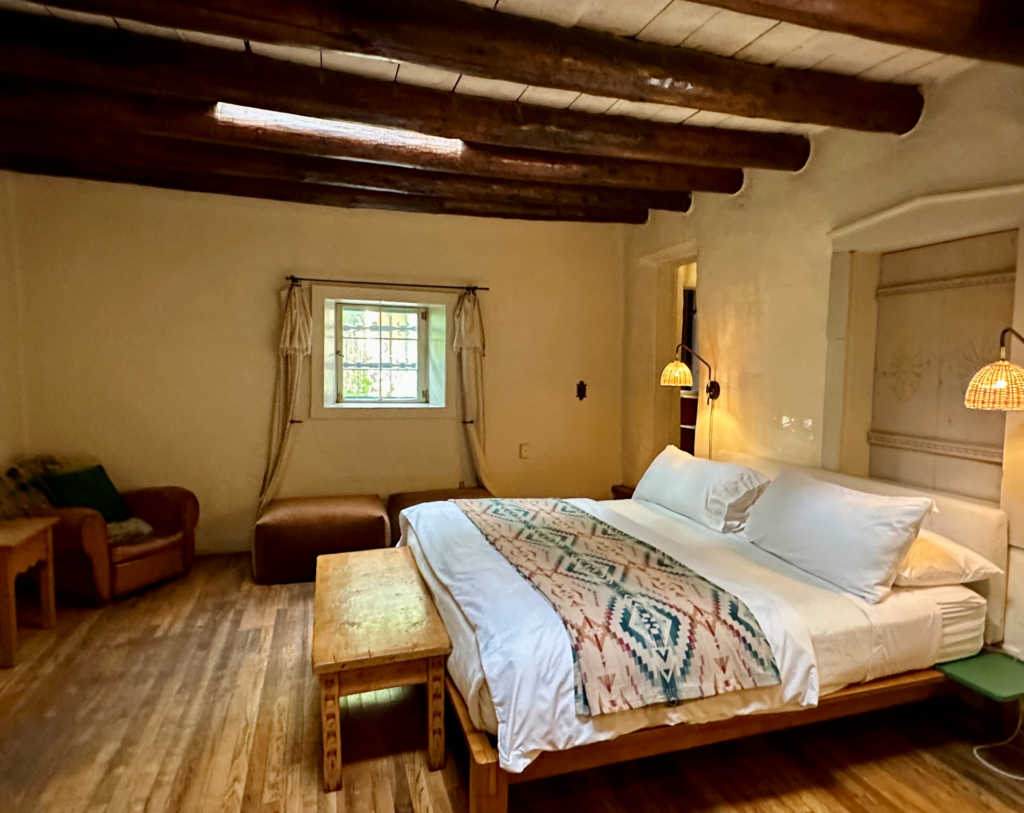
Then, in New Mexico, we checked into our beautiful casita (small house) at Las Palomas in Santa Fe. We toured the Georgia O’Keeffe Museum, the Loretto Chapel (with the famous winding staircase), the 1610 San Miguel Church (America’s oldest church), and the place where Billy the Kid was captured for the last time. At the Santuario de Chimayó, we filled a baggie with sacred dirt thought to heal the body and soul.
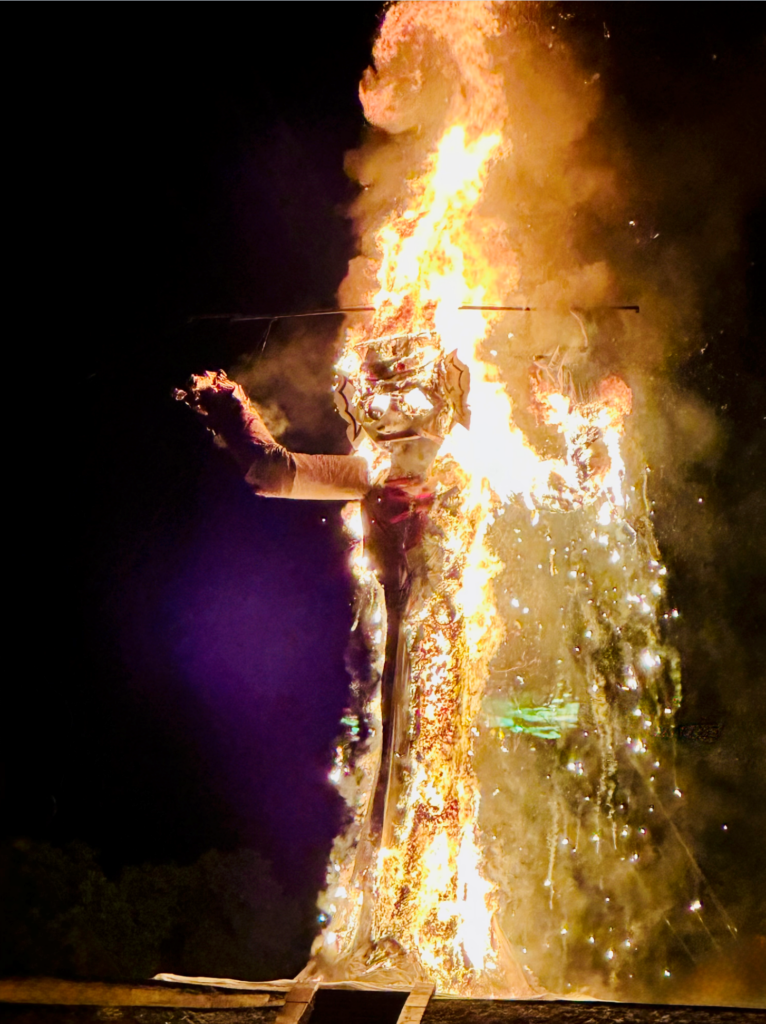
In reading the local tourist magazine at breakfast I learned that one of Santa Fe’s biggest festivals was that evening (AI didn’t tell me). The 101st Zozobra features a 50-foot working, steampunk marionette, which is built and placed on the stage, and people fill it with their “gloom.” This could be slips of paper with their fears or worries, parking tickets, divorce papers or any negativity. Santa Fe has about 90,500 residents, and festival attendance is capped at 50,000.
Gates opened at dusk with all sorts of music from country to mariachi to indigenous Pueblo complete with fire dancers. As the music started to beat rhythmically, a laser show began, followed by a drone show with the crowd yelling, “Burn him!” Then fireworks erupted. I thought my head would explode from overstimulation, and Zozobra’s did just that, bursting into flames as he moaned and his arms and mouth flapped. Eventually, he burned to the ground as the crowd cheered. And with him went everyone’s gloom! We would have missed it all had we relied on AI.
In the future, I’ll use AI for the framework, but nothing beats the personalization a human brings. Understanding personal habits (early riser or night owl), standards (budget motel or five-star resort), lifestyle (adventurous or “keep it safe”) give a much better chance of creating an optimal itinerary than does AI. Ultimately, AI should improve its glitches. But, in the end, a hybrid of the two will give the best results. Happy traveling!

Barbara Eichenlaub is a freelance writer living in Fox Chapel. She is an enthusiastic traveler and shopper, passionate about finding the best products, services and experiences available.