20 Years of Pittsburgh Quarterly
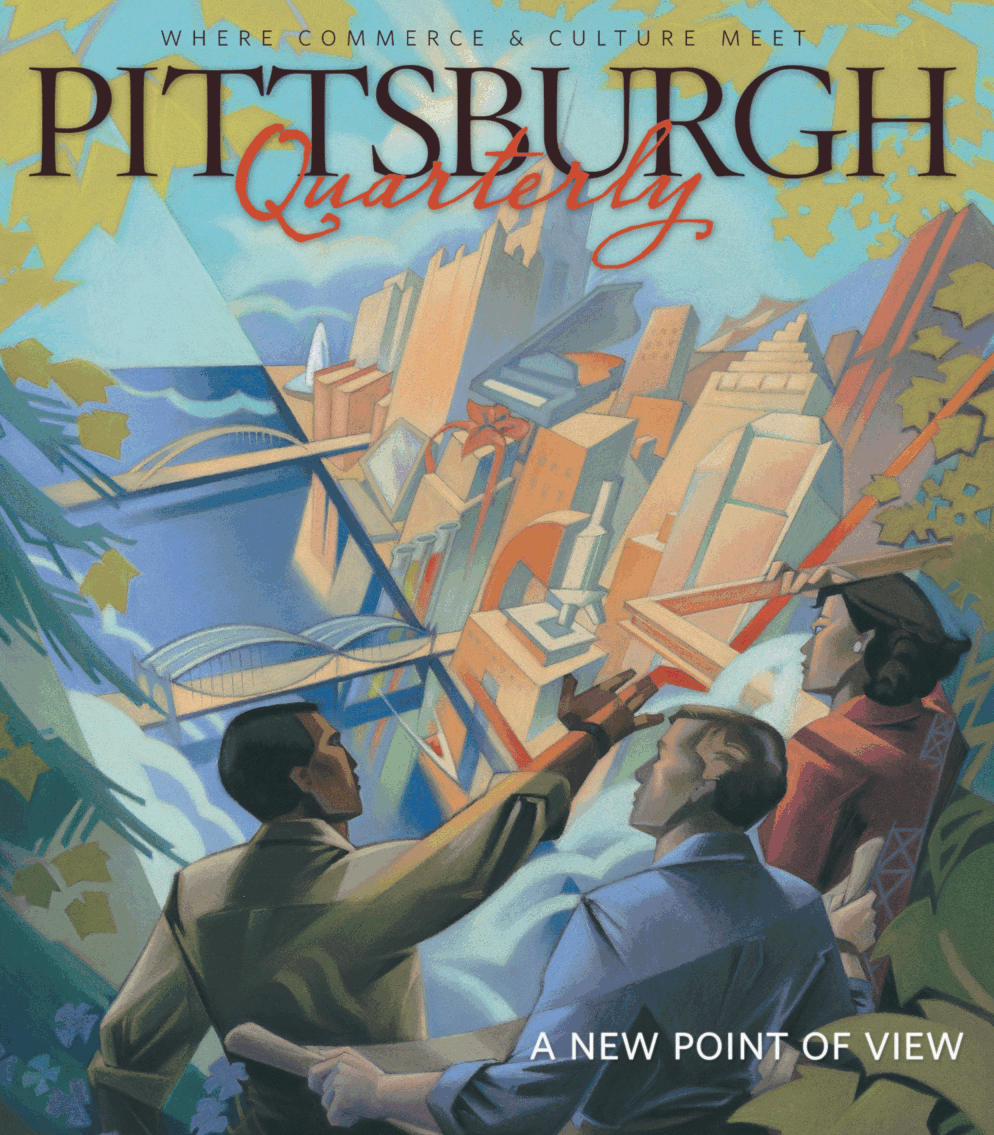
In 2005, I left my job as business editor at the Post-Gazette to start this magazine. After 20 years at the Pittsburgh Press and PG, I could see the newspaper industry’s future. It was time for a change. I considered moving to another city — a growing city — and visited several. I thought of changing industries. Ultimately, I felt that Pittsburgh had been good to me, so I hatched the idea for a magazine — quarterly, because I could keep quality high and costs low — doing most of it myself.
An internet site said that just one in 10 magazines lasts more than six months. I found that hard to believe but mentioned it to prospective investors. Despite that, I found support, most notably from Dick Simmons, whose decisive investment made Pittsburgh Quarterly a reality. Dick said that all his success had come in Pittsburgh, and he would support something that would help the city.
Long ago, my Dad told me: “If you knew everything, you’d never do anything.” Well, I knew very little of what was ahead. Selling advertising? I got books on tape: “How to become a salesman in 10 days.” I listened to motivational experts to keep me believing, like the “Little Engine That Could.”
The big January day when the first issue arrived, the truck driver called in a panic; his enormous semi rig was snared in an impossible turn, stopping traffic on the South Side’s busy Carson Street. I arrived to a chorus of angry motorists. Ditching my car, I ran over to the hapless driver. On the sidewalk at my feet was a tattered red flag with a wooden handle. I picked it up and helped extricate the truck, ultimately jogging in front of it and waving my red flag for 10 blocks until we reached the depot.
We mailed most of those first 40,000 copies, but to save postage, we delivered door-to-door in denser neighborhoods. I assembled my three kids — ages 12, 14, and 15 — and with the red wagons they’d ridden in as toddlers, we delivered all that gusty January day. The next morning, an irate woman called to say a magazine had left her storm door ajar, and the high wind had blown it off its hinges. So far, so good!
A month later, I was thrilled to receive my first advertiser check — $5,000 from a company with 120,000 global employees. When that check bounced, I laughed. Even the world’s biggest companies weren’t perfect.
I set out to make a magazine that was actually worth a reader’s time. Since then, 200 writers, artists, and designers have led to our being judged Pittsburgh’s best magazine 20 years in a row by the Press Club of Western Pa. Some 600 advertisers have provided the fuel with their marketing investments. Five have been with us every issue: Dollar Bank, Federated Hermes, Howard Hanna, UPMC and Weisshouse. To all and to our subscribers, I simply say, thank you!
What changes after 20 years? Aside from a balding guy with glasses looking back in the mirror and the magazine boxes getting heavier every year, the biggest change is that fear has fallen away. Fear of all kinds. The magazine keeps improving, in part because excellent writers now get in touch with us. Now, our obituaries are full of people I’ve known well; many have been friends and even advisors. Twenty years ago, I still looked to the region’s leaders for direction. Now the mantle of regional leadership is there for any who’ll step up and take the challenge.
In the last 20 years, the story of Pittsburgh has been up and down, with an anomalous demographic hangover from the 1980s exodus, sleepy, one-party rule and a business climate that’s not as welcoming as it needs to be. But it’s a wonderful place to live — a city with real community, where your actions matter, where people treat each other well, and where young and old can build whatever lives they want. I think it’ll soon become the best place to live in the U.S.
Forty years ago, I arrived here innocently enough for a 12-week internship, expecting to stay that long. I’ve never left. I can’t think of any of my friends who’ve stayed in one place as long. And, as Robert Frost wrote in “The Road Not Taken,” that has made all the difference.

A journalistic innovator, Heuck has been writing about Pittsburgh for 40 years, as an investigative reporter and business editor at The Pittsburgh Press and Post-Gazette and as the founder of Pittsburgh Quarterly. His newspaper projects ranged from living on the streets disguised as a homeless man to penning the only comprehensive profile in the latter years of polio pioneer Dr. Jonas Salk to creating a statistical means of judging regional progress that has led to similar projects across the country. Heuck's work has won numerous national, state and local writing awards. His work has been cited in the landmark media law case "Food Lion vs. ABC news." He is also the founder and CEO of Pittsburgh Tomorrow, a nonprofit whose mission is to reverse population decline by reinvigorating the region's civic spirit and economy.