That Damn Crazy Pitch: Rip Sewell and the 1946 All-Star Game
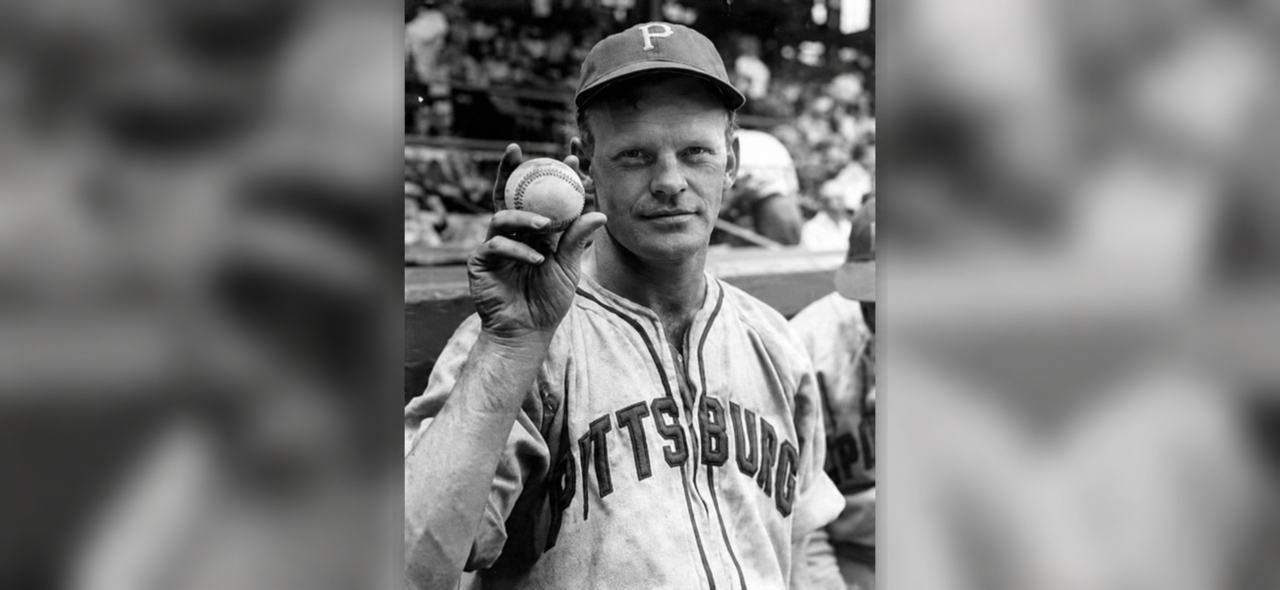
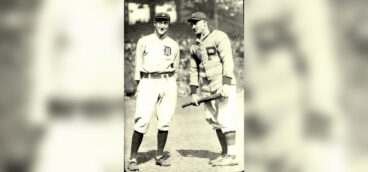
Just before the beginning of the 1946 All-Star game, played 80 years ago in Boston’s Fenway Park, Ted Williams approached Pirates pitcher Rip Sewell and said, “Hey Rip, you wouldn’t throw that damn crazy pitch in a game like this, would you?” Sewell responded, “I’m gonna throw it to you, Ted, so look out.”
That damn crazy pitch was Sewell’s famous blooper ball. Sewell, an outstanding pitcher for the Pirates in the 1940s, was best known for his blooper ball that tantalized and baffled hitters. It was a pitch that fans loved and drove batters crazy.
The blooper ball became so popular that opposing players sometimes whistled from their dugout and waved their fingers up and down just for the fun of seeing one of their teammates flail away at it. Sewell once said that “most guys swung at it no matter where it was. It was like waving a red flag in front of a bull…. I had as good control of it as I had of my fast ball and curve. I’d spot it around here and there, when they were least expecting it. It reached an arc of about 25 feet.”
Rip Sewell began his pitching career with the Pirates in 1938, but he didn’t start throwing the blooper ball until the 1942 season. In Donald Honig’s oral history, Baseball When the Grass Was Green, Sewell said that the story of the blooper started with “a shot gun blast” in Tennessee’s Ocala National Forest. On December 7, 1941, that day of infamy. Sewell went deer hunting. When another hunter mistook Sewell for a deer, he fired two loads of buckshot out of a twelve-gauge shot gun: “Caught me in both legs. That shot tore holes in me as big as marbles. One of them smashed up the big toe which I pitched off of.”
Because of the severity of his wounds, Sewell had to learn to walk again, though he had to keep his badly damaged big toe up. When he started throwing a baseball again, the injury to his big toe forced him to step straight forward, and that was when he invented the blooper: “I was the only pitcher to pitch off the top of his toes and that’s the only way to throw a blooper. It’s got to be thrown straight overhand.”
Sewell was able to throw his blooper ball with “terrific backspin” by holding the baseball by its seam and throwing it off three fingers. The ball, when released, held its backspin all the way to home plate: “So the ball was going slow, but spinning fast. Fun to watch, easy to catch, but tough to hit.”
At first Sewell thought the blooper ball was nothing more than a novelty pitch. In early 1942, before an exhibition game against the Tigers in Muncie, Indiana, where the Pirates held spring trading during World War II, he was warming up and tossing blooper balls to his catcher Al Lopez, who was so impressed that he told Sewell “Why don’t you throw it in a game?” A veteran catcher, Lopez would go on to manage the Indians and the White Sox in the 1950s and was elected to the Baseball Hall of Fame in 1977.
The Tigers Dick Wakefield became the first victim of Sewell’s blooper ball. In a narrative right out of a Bugs Bunny cartoon, Sewell remembered Wakefield’s reaction to the pitch as it sailed high in the air and, coming down, headed for the strike zone: “He started to swing, he stopped, he started to swing again, he stopped, and then he swung and missed it by a mile. I thought everybody was going to fall off the bench, they were laughing so hard.”
When Pirates manager Frankie Frisch stopped laughing, he encouraged Sewell to throw the blooper ball once the season started. There was an initial problem when umpires refused to call the blooper pitch a strike, but when Frisch filed a protest and won his case, the blooper sailed high in the air and baffled hitters for the rest of the season.
In 1942, Rip Sewell and his blower ball won 17 games, even though he was still working his way through his injuries from the hunting accident. In 1943, he won 21 games, the most by any pitcher in the National League, and pitched three shutout innings in the All-Star game. He won 21 games again in 1944 and pitched a scoreless inning in the first All-Star game held in Pittsburgh since its inception in 1933.
The 1945 All-Star game was canceled because of growing travel problems as World War II was coming to end. In 1946, with future Hall-Famers, like Hank Greenberg, Bob Feller, Joe DiMaggio, and Ted Williams returning from military service, the All-Star game, always a showcase for baseball’s best, took on a special luster.
Unfortunately, the game proved to be a dud. Going into to the bottom of the eighth inning, the American League on home runs by Ted Williams and the Yankees King Kong Keller had an 8-0 lead over the National League. Most of the regulars for both teams were out of the game, but American League manager Steve O’Neill, as a gesture to Red Sox fans, kept Ted Williams, who was due to bat in the bottom of the eighth, in the game. When National League manager Charlie Grimm sent Rip Sewell to the mound to pitch the eighth inning in a mop up role, it sent up one of the most memorable moments in All-Star game history.
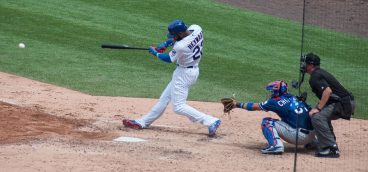
When Ted Williams came to bat, he “shook his head from side to side in quick little movements” as a way of telling Sewell not to throw the blooper ball. Sewell nodded to Williams who shook his head again, but Sewell nodded again, and, remembering their pre-game encounter, thought, “you’re gonna get it buddy.” So he wound up like he was going to throw a fastball, and instead threw Williams a blooper. A frustrated Williams swung mightily, bur only fouled the ball off the tip of his bat.
When Williams stepped back into the batter box, Sewell nodded at him again and threw another blooper ball that sailed wide of home plate. With Williams set for another blooper, Sewell fired a fast ball that Williams took for a strike. With two strikes on a frustrated Williams, Sewell tossed one more blooper ball: “it was a good one. Dropping right down the chute for a strike. He took a couple of steps up on it, which is the right way to attack the pitch and hit it right out of there. I mean he hit it.”
The crowd at Fenway Park rose to its feet and “went crazy.” Sewell added to the fun by chasing a laughing Ted Williams around the bases, telling him that “the only reason you hit it was I told you it was coming.” At the end of the inning, fans gave Sewell a standing ovation.
Years later, Sewell added to the legend of that damn, crazy pitch by saying, “he was the only man to hit a home run off the blooper, Ted Wiliams, in the 1946 All-Star game.”

Richard “Pete” Peterson is the co-author, with his son, Stephen, of “The Slide: Leyland, Bonds, and the Star-Crossed Pittsburgh Pirates” and “The Turnpike Rivalry: The Pittsburgh Steelers and the Cleveland Browns.”